
The heartbeat sensor
If you ever played Call of Duty, you will certainly remember the heartbeat sensor. It’s that little screen bolted to the side of your gun, sweeping every couple of seconds and opponents light up as dots — through walls, at night, no line of sight required.
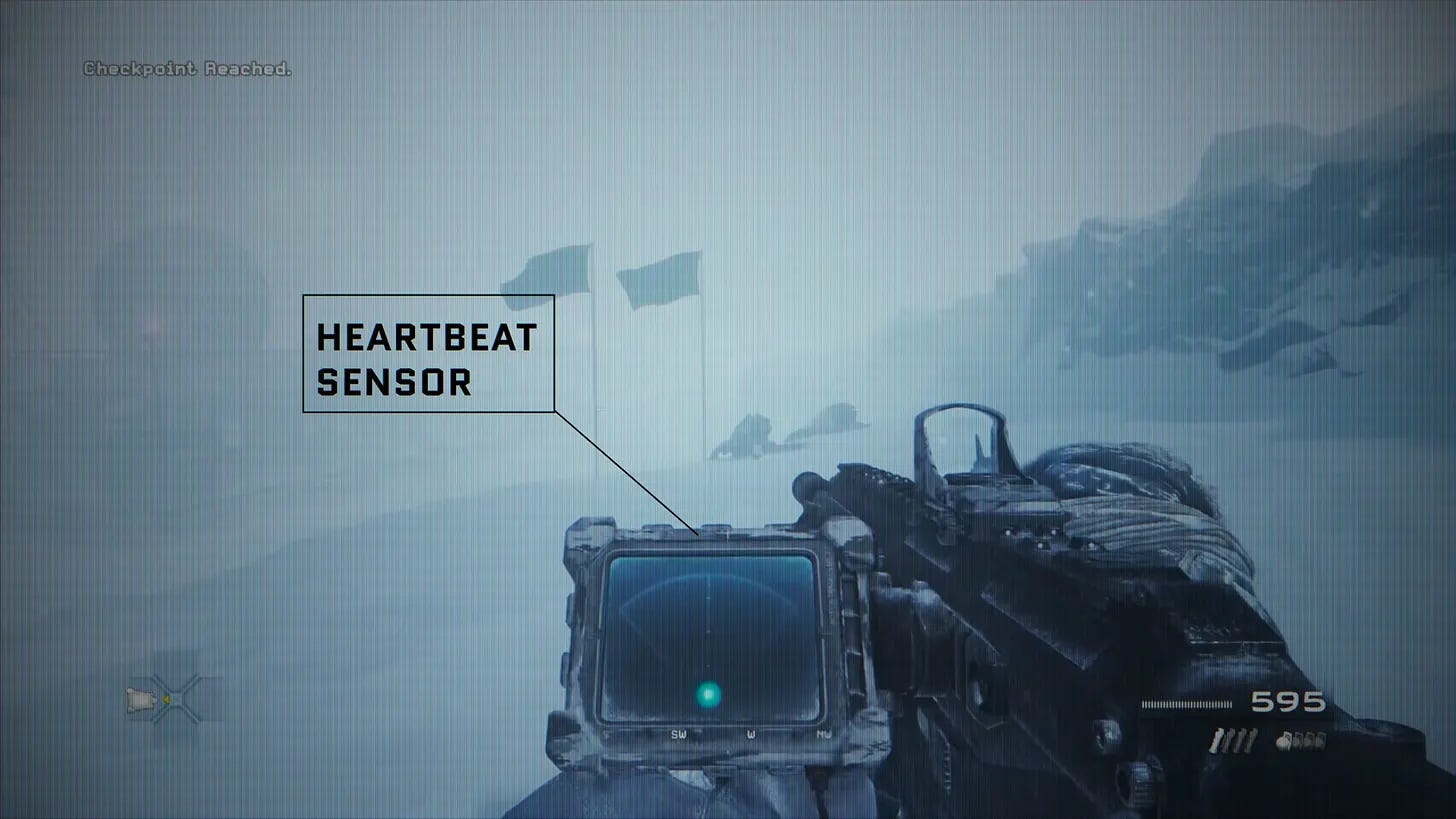
And you probably thought it was some sci-fi nonsense. Well it turns out the real version exists and it’s in soldiers’ kit bags. A consumer version of it is sitting on your bedside table, a city-scale version of this is going up on rooftops across 21 Indian states, and two months ago in the mountains of Iran, the CIA reportedly used a human heartbeat to find one man hiding in a crevice and brought him home.
Now, if you thought my wi-fi sensing video was nuts, that was standard definition my friends — today we’ll cover the entire gamut to 4K. Let’s get into it. Watch the 15 min video on YouTube, or read on for the entire deep dive.
Quick primer: Your router can already detect people moving through your home. We don’t need cameras, just the Wi-Fi signals bouncing off your body at around 5 GHz. We can read those distortions, and that gives you a coarse blur that someone moved. There is a presence here.
Sense Through the Wall
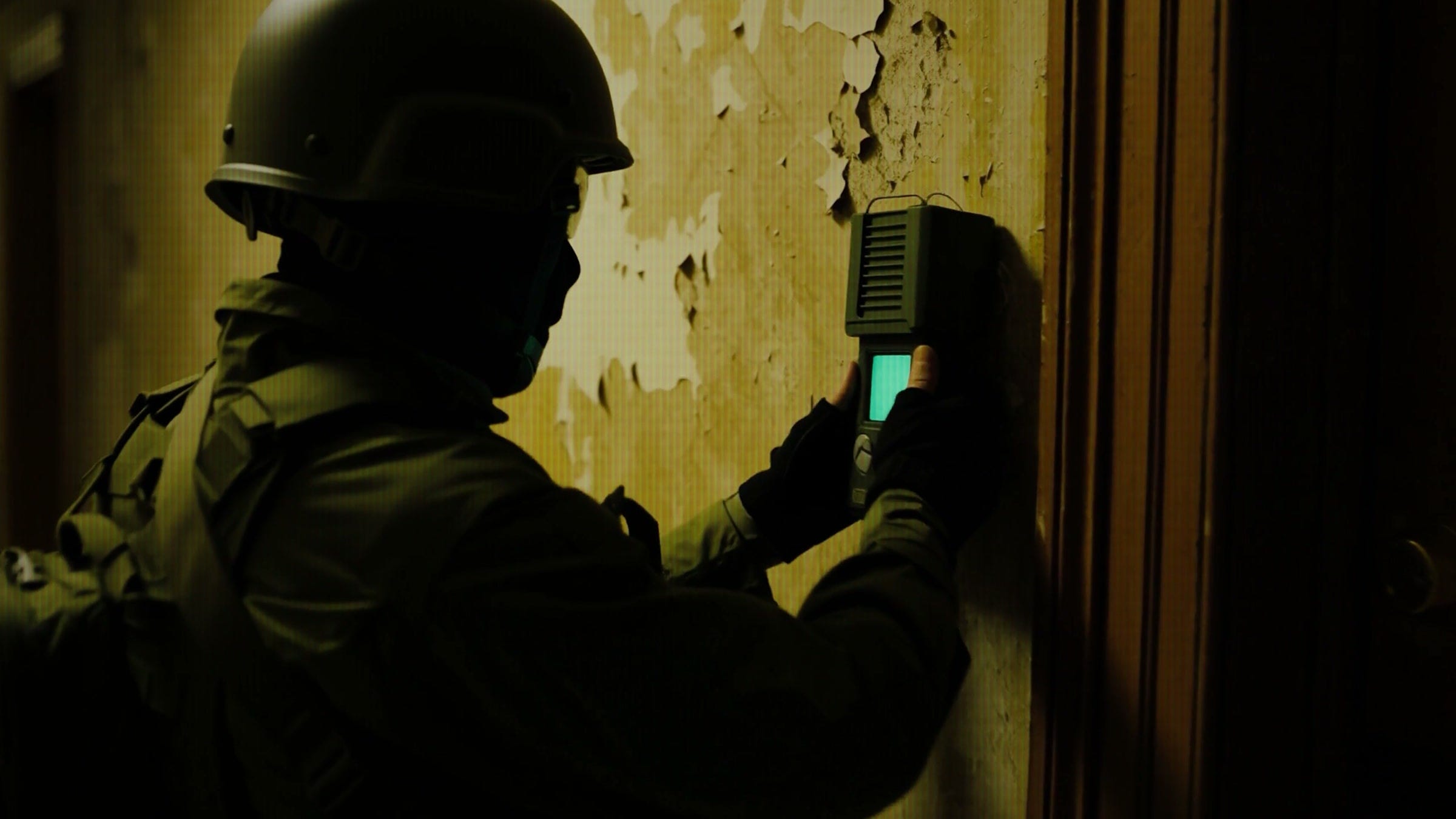
The military figured this out first, obviously. And they gave the program the most on-the-nose name in defense history. It’s called “Sense Through The Wall” or STTW. It was Army funded, DARPA was involved, and now it’s declassified, patents and all. The use case is simple and visceral. Imagine you’re a soldier doing an urban breach. Intel says there might be a hostile on the other side of the door. How many? Where? Are they armed and waiting or panicking and looking for the exit?

That split second decision is the difference between a clean entry and a firefight. So they built a sensor that looks like a temperature gun. You point it at the door and on a little display, a blob appears. There’s a person. Here’s roughly where they are and here’s their heartbeat measured through the wall. Is it a calm 60 beats per minute, or is it 140 and spiky? Someone crouched behind a door with a weapon in hand is usually amped up. The range of this tech is about 5 to 50 ft. It works through drywall, wood, brick. There’s nothing to see, nothing to hear, nothing to feel. You have no idea this thing is pointed at you.
DARPA then pushed it further with a program called Biometrics at a Distance. Essentially, how do you measure the vital signs of multiple people at once through obstructions at tens of meters? And here’s the scenario they had in mind. Imagine a bomb goes off in a market. Everyone’s fleeing, pandemonium. Everyone’s heart rate is spiked up, except for that trained operative walking calmly out of the chaos. They wanted to be able to scan the crowd for who’s not scared. Psychological calm as a biometric. Just sit with that for a second.

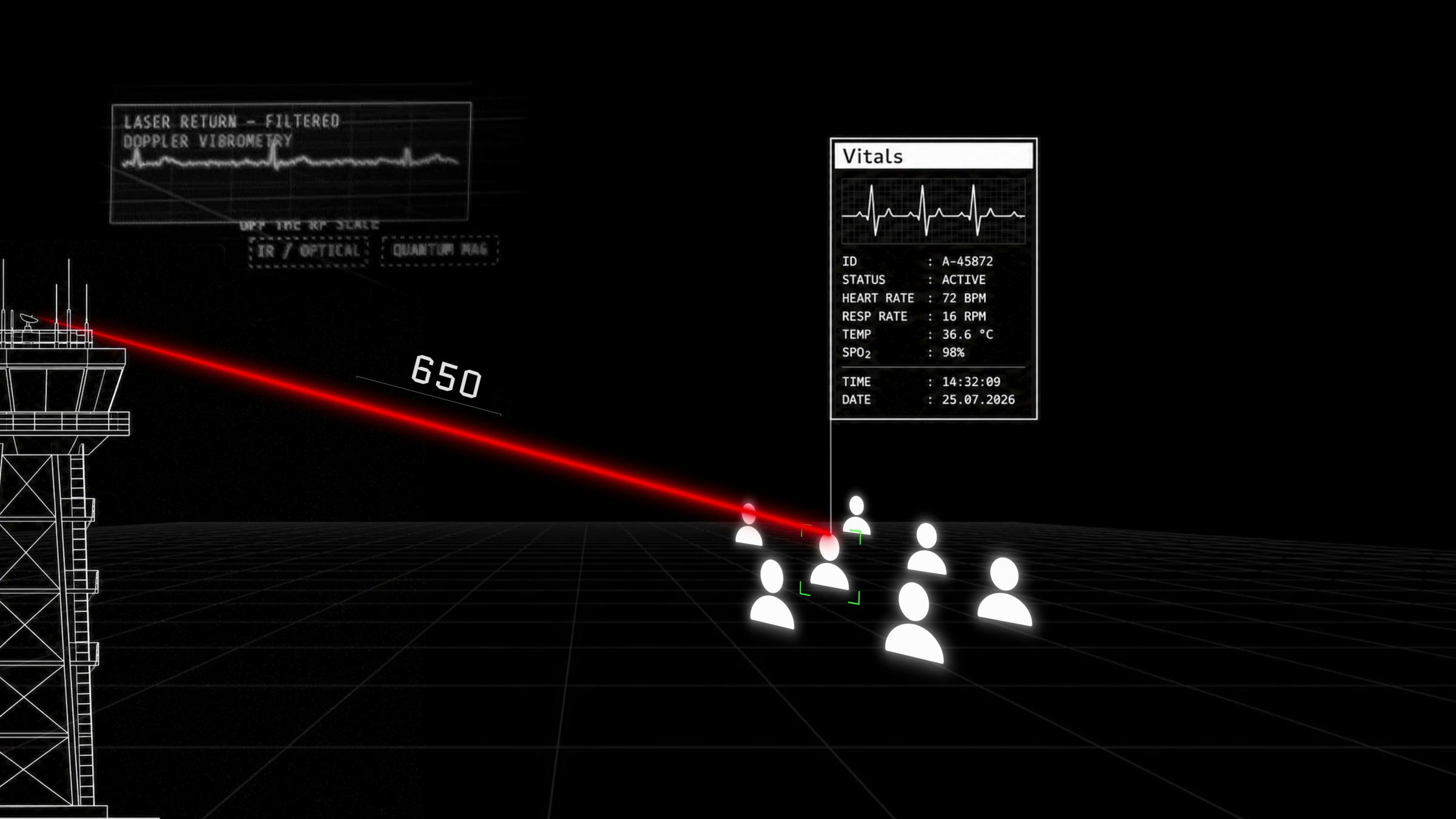
And then there’s Jetson, built for the US Special Forces. An infrared laser instead of radar. Same idea, but it can identify a specific person’s cardiac signature from 650 ft away. Because in case you didn’t know, your heartbeat waveform is as unique as your fingerprint. You can change your face, you can change the way you walk, but you cannot change your heartbeat. That was the military track. Obviously it was expensive, it was classified for a while. There was two decades of R&D.
And by the end of this piece, I’ll going to show you how similar capabilities for your own home costs tens of dollars on Amazon.
Five layers of RF sensing ft. mmWave
To fully appreciate RF sensing, let me show you the full stack of what you can do with just mmWave sensor.
To simplify the physics a bit, millimeter wave is the same trick we’ve been talking about at 24 to 60 GHz. So we’re talking an order of magnitude increase in frequency. Think of it like this — shorter wavelengths resolve smaller details. So where Wi-Fi might see a coarse-grain blur, millimeter wave sees a clinical picture.
