

For decades, sports broadcasting has been a one-size-fits-all experience. You see only what the camera operators see, or what the control room wants you to see. But something interesting is happening right now: the tech we use to capture sports has raced a decade ahead of how we actually watch it.
We’re recording every movement, every heartbeat, and can reproduce a game from any angle in 3D. But barely any of that reaches your living room. In my latest video, I break down the companies and technologies that are starting to close that gap.
Watch the full video here:
Video Chapters:
0:00 – The Immersion Gap
0:48 – Computer Vision & Hawk-Eye
1:42 – Player Tracking & Wearables
2:08 – AI Analytics & Real-Time Stats
3:07 – VR Sports Viewing & Why It Fails
4:16 – Radiance Fields & Gaussian Splatting
5:10 – Viewpoint Pro: Virtual Replays
5:59 – Arcturus: 4D Gaussian Splatting
7:31 – Muybridge: Virtual Camera Systems
9:53 – F1 Vision Pro Experience
11:26 – XR Sports Alliance
11:47 – COSM: The $600 Ticket
13:04 – The Future of Sports Broadcasting
The Data Foundation Already Exists
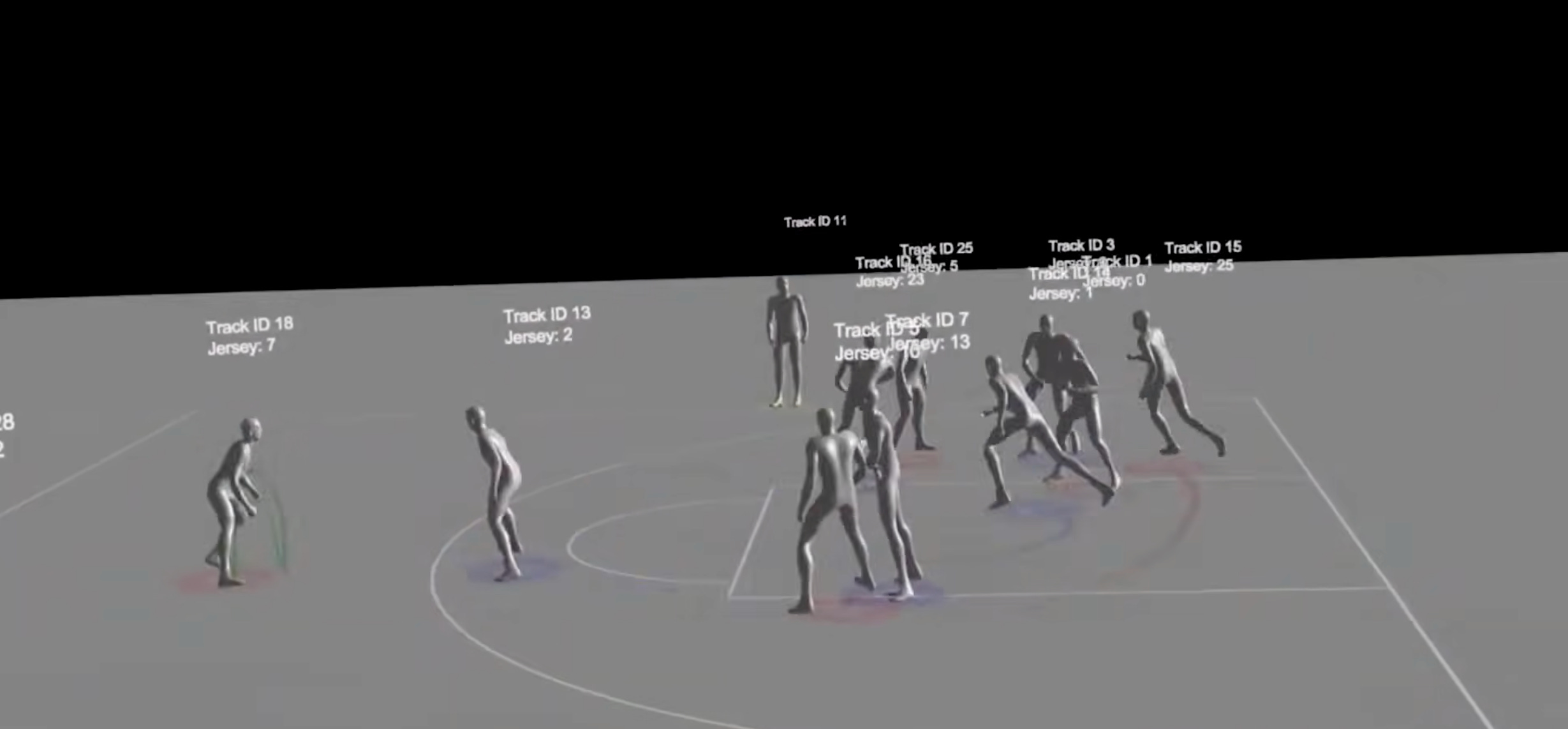
This starts with computer vision. Sony’s Hawk-Eye system mounts high frame rate, perfectly synchronized cameras across a stadium and reproduces the 3D location of every player with millimeter accuracy. The NFL is embedding RFID tags in shoulder pads, pylons, and even the ball itself — essentially 3D AirTag coverage of every moving entity on the field.
All of that raw data feeds into AI platforms. The MLB partnered with Google Cloud to analyze 15 million data points per game in real time. The NFL runs Next Gen Stats through AWS. Bat speed, hit strength, and throw length are all computed instantly. This data already exists. The question is: what do we do with it on the viewing side?
Why VR Keeps Failing
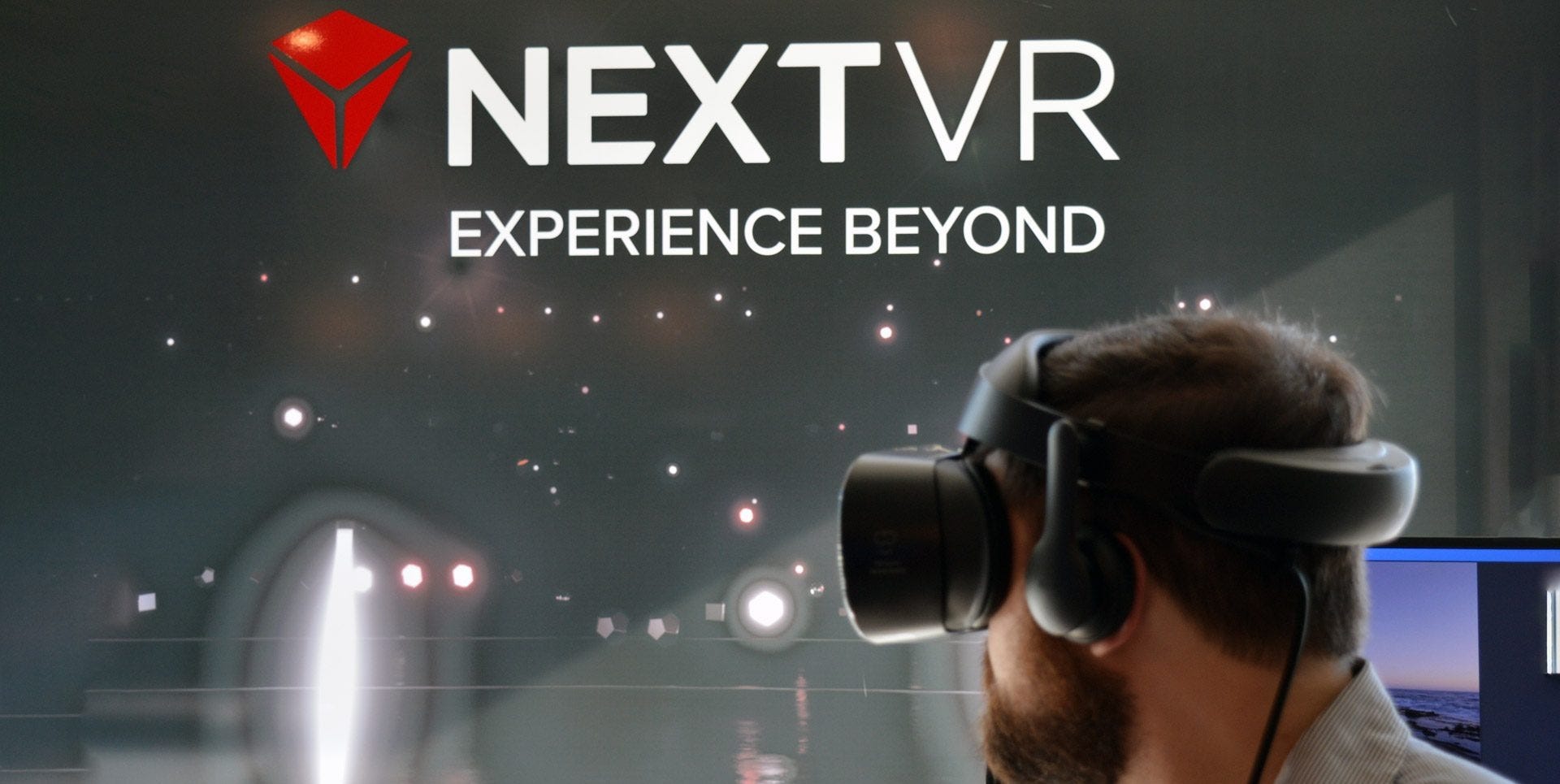
We’ve had immersive headset experiences for years. Apple acquired NextVR, which built camera systems for stereo sports capture, but has yet to do anything with the acquisition. There are a number of other apps to watch sports on Quest headsets, and Meta has sold around 20 million headsets to date. But how many are actually in use? Likely well under 10 million. More importantly, sports are inherently social. You’re with your friends, drinking a beer and eating stadium food. Strapping on a headset kills all of that. The slight immersion gain just doesn’t justify the tax, and that truth has burdened headsets for years.
The New Wave of Volumetric Capture
But new tech is making the immersion far more compelling. Arcturus is using 4D Gaussian Splatting — multiple cameras reproducing the action in full 3D so you can pause at any moment and view it from any direction. The kind of angles The Matrix spent years of R&D to achieve is now possible for any moment in an MLB game.
Muybridge is approaching it differently — deploying strips of cameras non-invasively around a court and using multi-plane images to create a virtual camera slider. No neural radiance fields, no bulky rigs. Just an elegant array that acts as a virtual cinematographer, following the action without ever getting in a player’s way. MPI is tech I actually had a chance to work on during my time at Google, so it’s exciting to see it applied to live sports.
Then there’s the F1 Vision Pro experience — what started as a viral concept is now arguably one of the best reasons to own a Vision Pro. A spatial mini-map of the track, multiple camera feeds, car tracking with smooth easing — all contextualized in a 3D canvas. Apple has the F1 rights and the hardware. This is becoming a very strategic play for them.
The XR Sports Alliance is also working to connect all of these pieces — bringing together streaming providers, chip makers like Qualcomm, and sports organizations to make it easier to onboard games into immersive platforms.

The Winner (So Far) Doesn’t Use a Headset
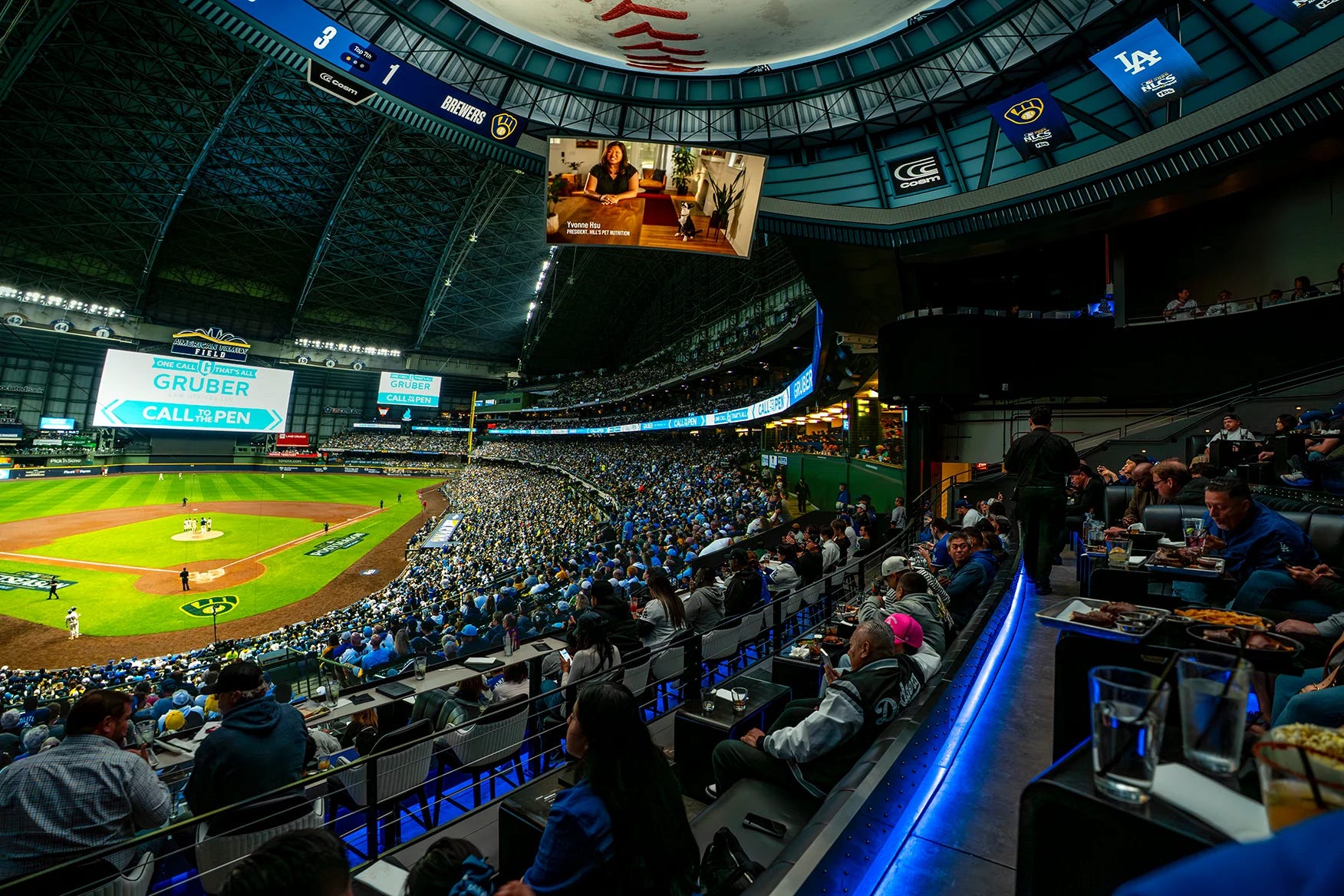
Perhaps the most telling signal is that the most commercially successful immersive sports experience today isn’t in a headset at all. It’s COSM — a massive 8K wraparound LED dome, essentially a mini version of the MSG Sphere dedicated to sports viewing. People are paying up to $600 a ticket. You get the best seat in the house, insane visual quality, and most importantly, no dorky headset on your face. You can talk to your friends, sip your drink, and actually enjoy the social experience that makes sports what they are.
Where This Goes
The experience is likely going to bifurcate. On one side, premium in-person venues like COSM. On the other, personalized broadcast experiences — imagine creators on Twitch or YouTube casting their own version of a live event with custom camera angles and commentary, rather than reacting to the same vanilla feed everyone else gets.
All the pieces are there. The data is being collected. It’s a question of how it reaches you as the consumer. I’d argue that COSM’s sold-out domes prove the demand exists. Now we wait for the hardware to catch up.
Check out recent discussion on X:
If this gave you something to think about, share it with fellow reality mappers. The future’s too interesting to navigate alone.
Cheers,
Bilawal Sidhu