

A couple of weeks ago, I showed you what it looks like when the world’s most important waterway shuts down. 130 ships a day dropping to single digits. Iran’s toll booth. Ships going dark. The data was alarming.
Then on April 7th, Trump gave Iran a deadline to reopen the Strait of Hormuz by 8 PM ET -- or else “a whole civilization will die tonight” -- and by that evening, Pakistan had brokered a two-week truce. Oil futures crashed 15% in minutes. The headlines said the crisis was over.
One week later, a US naval blockade is in effect, the ceasefire exists in name only, Israel has launched a ground assault into southern Lebanon, and Iran is calling the whole thing piracy.
So I loaded up God’s Eye -- swapped in the latest AIS maritime data, overlaid the strike coordinates, and started scrubbing the timeline to see what the data actually says.
Watch the full video here:
Is It Open?
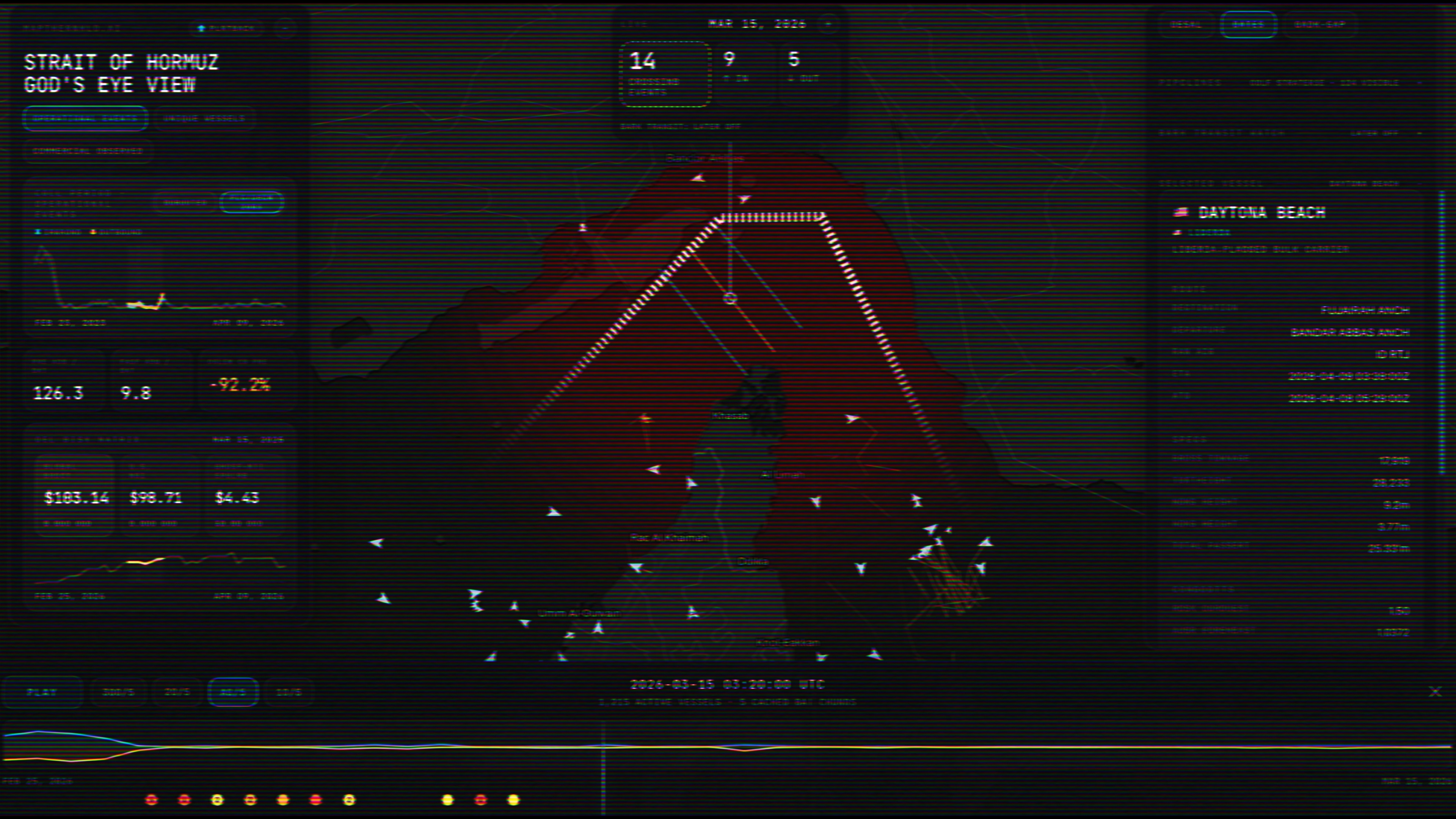
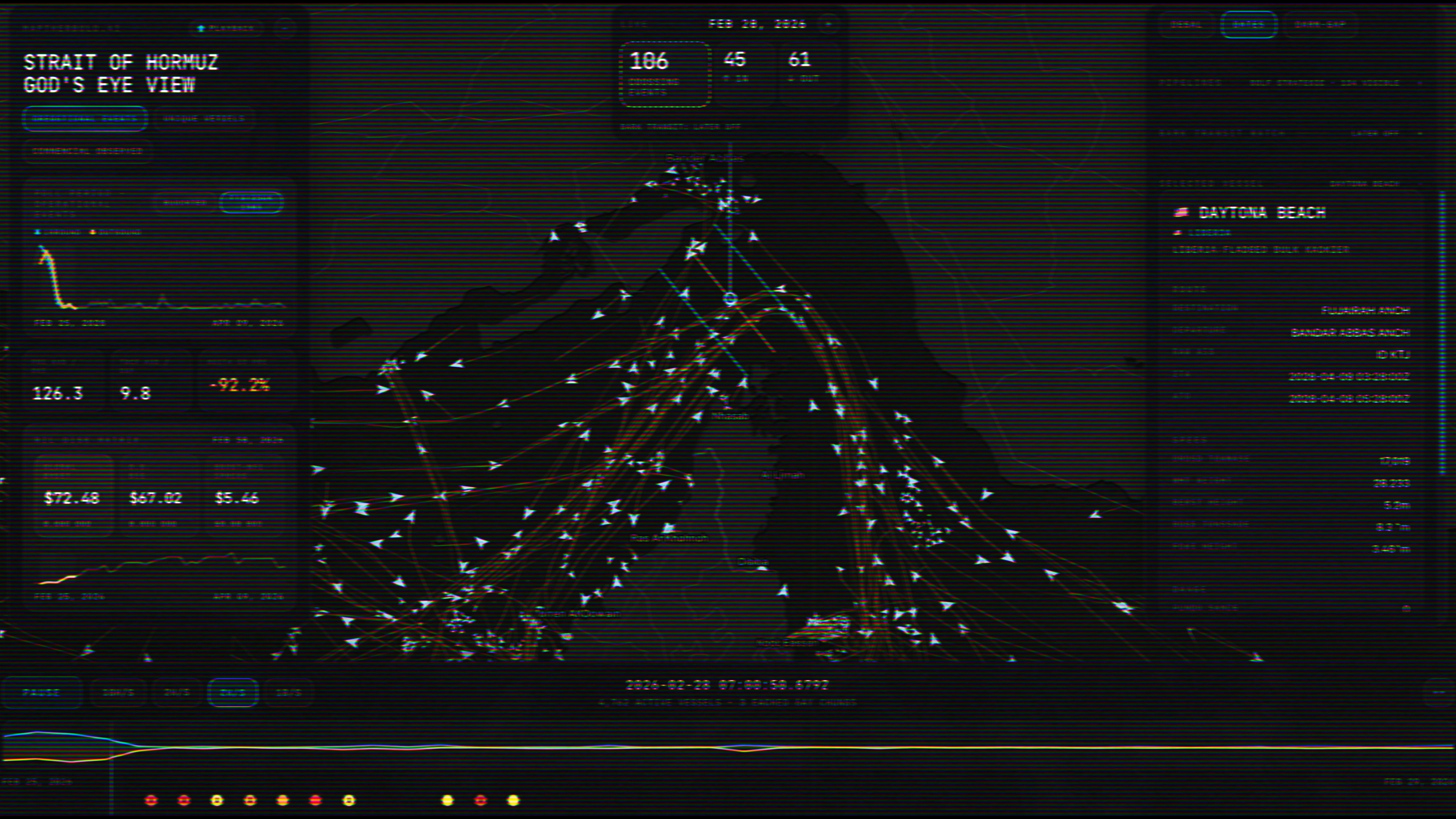
Before the conflict, roughly 130 ships transited the Strait of Hormuz per day. On the first day of the ceasefire -- April 8th -- 15 got through. The day after: about 6. The oil futures that crashed on the ceasefire announcement? They bounced back above $120 within 24 hours. Traders figured it out faster than the headlines did.
If you scrub through the AIS data in God’s Eye day by day, it’s stark. Where there used to be a constant stream of vessels, there’s just... nothing. A handful of dots where there used to be hundreds.
Trump called the strait “completely, immediately, and safely open.” Then a few days later said Iran was doing a “very poor job” of handling traffic and that “that is not the agreement we have!”
When I started clicking through vessels post-ceasefire, the picture was pretty clear. The ships that are getting through aren’t taking the normal shipping lanes at all. Iran published a map confirming mines in those lanes and is routing ships north, past Iranian-controlled islands near Larak -- putting them within range of light artillery from Iranian shores.
The toll booth from the last video? Still operational. $1 to $2 per barrel. A fully loaded VLCC pays $2 to $3 million per transit. IRGC escort, one ship at a time. Insurance premiums have hit 2.5 to 5% of hull value -- we’re talking $600,000 to $1.2 million per trip for a $120 million tanker. Several major insurers pulled Gulf war risk cover entirely. The US doubled its reinsurance backstop to $40 billion to keep the market from freezing.
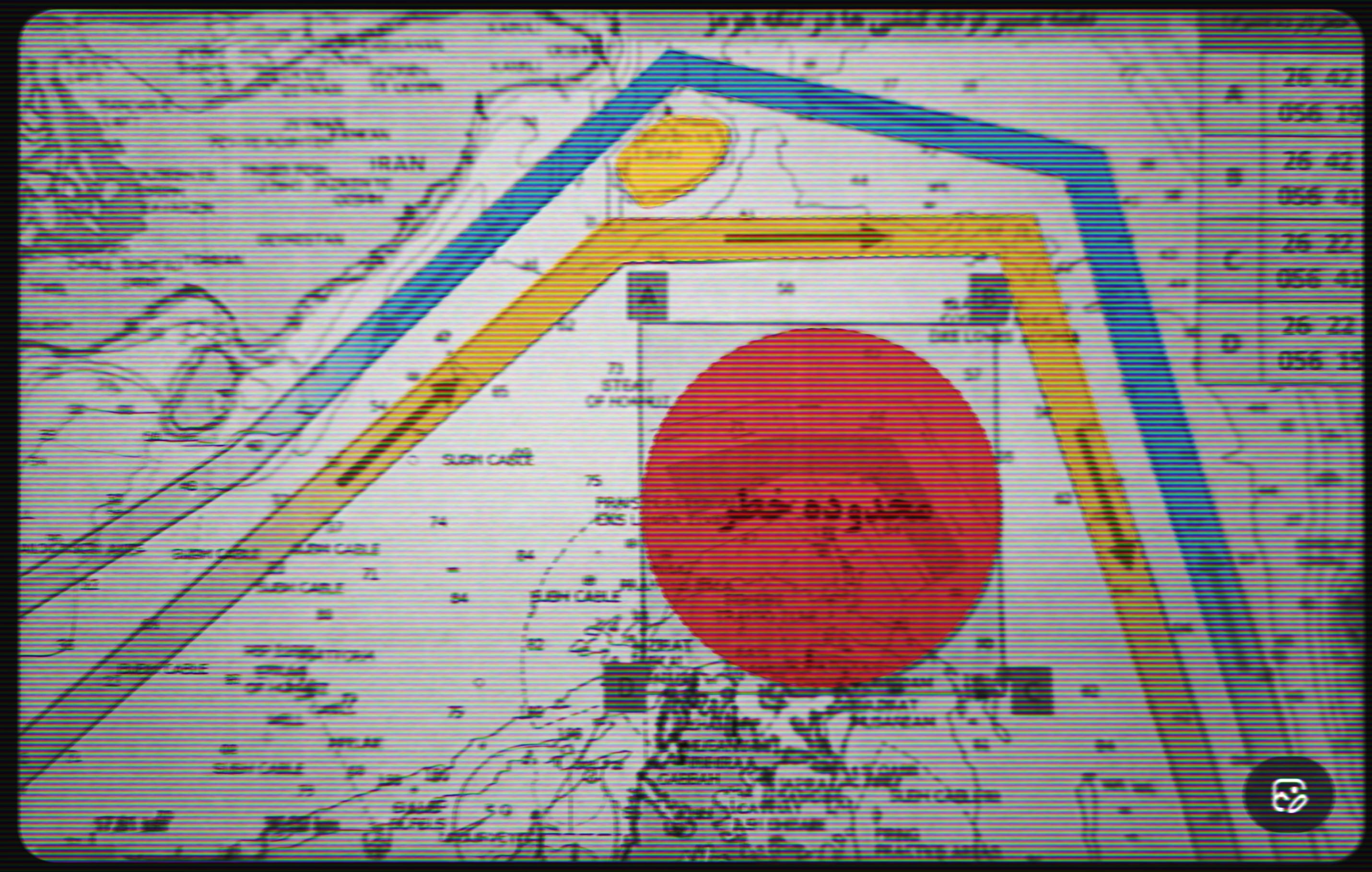
Two bottlenecks. Insurance and Iran. The strait was technically open the way a highway is technically open when every lane is closed except one, and there’s a toll collector with a rifle.
Eternal Darkness
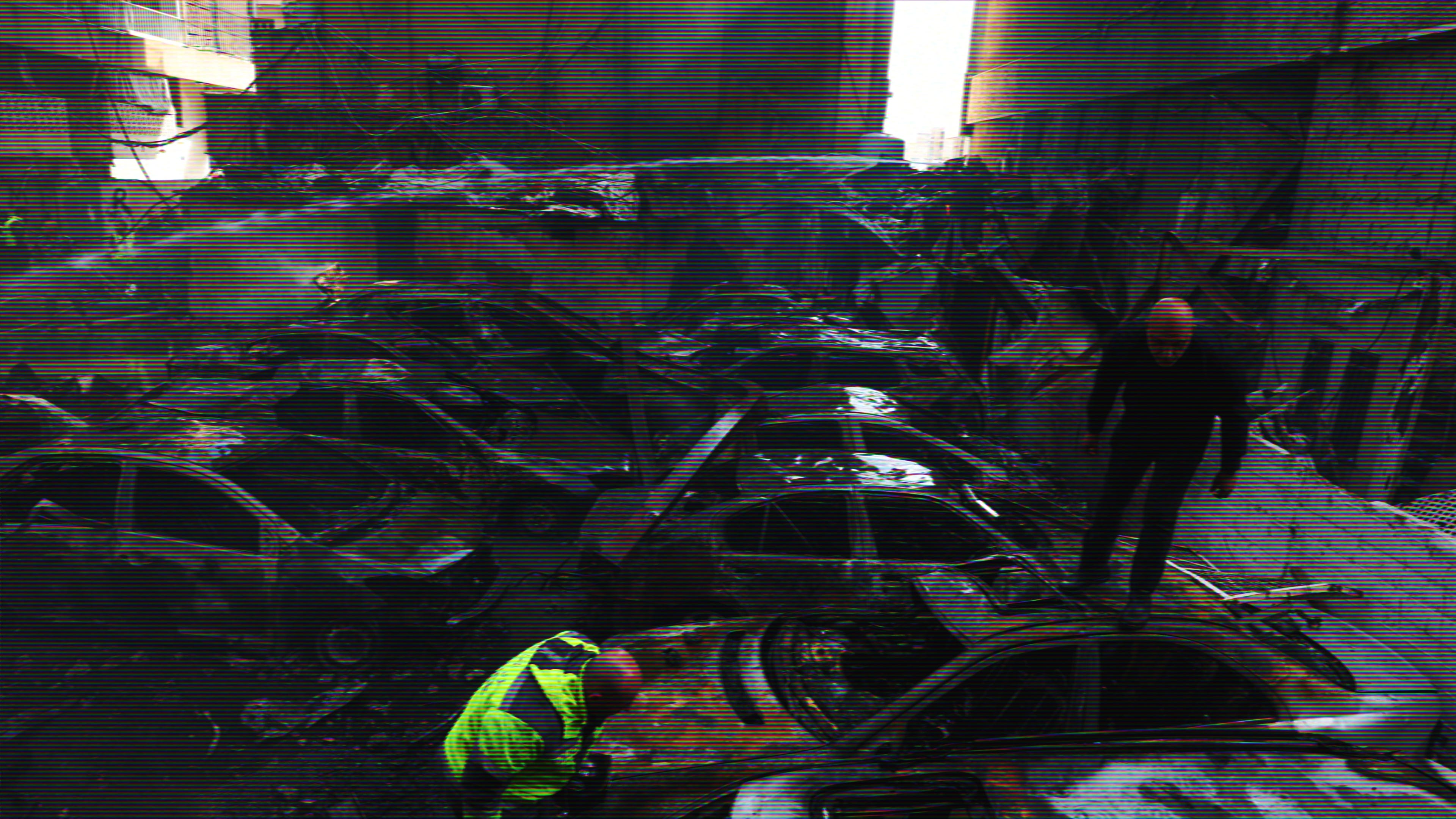
Within 24 hours of the ceasefire, Israel launched what it called Operation Eternal Darkness -- 50 IAF jets hitting over 100 Hezbollah targets across Lebanon in 10 minutes. Lebanon called it Black Wednesday. Over 350 killed. They struck during rush hour in central Beirut without warning. Netanyahu basically said Lebanon has nothing to do with this deal. The White House confirmed it.
There’s a rumor circulating in the OSINT community about how Israel managed to pull that off -- how you hit 100 targets simultaneously in 10 minutes. You’d need to know the location of every single one of them at the same time. The speculation is that Israeli intelligence got onto a Hezbollah Zoom call and used it to geolocate everyone who dialed in, timing the strikes to the confusion around the ceasefire. Unconfirmed. But Hezbollah is treating it as the biggest security compromise since the pager incident.
When you overlay the strike data on the globe, the density is insane. The targeting was so tightly packed it looks like a single cluster, not a hundred individual strikes.
This war relies heavily on AI-assisted targeting to execute. And that changes the calculus for every country thinking about how to communicate, how to organize, and how to operate in a world where a single compromised call can paint a hundred targets simultaneously.
The Retaliation
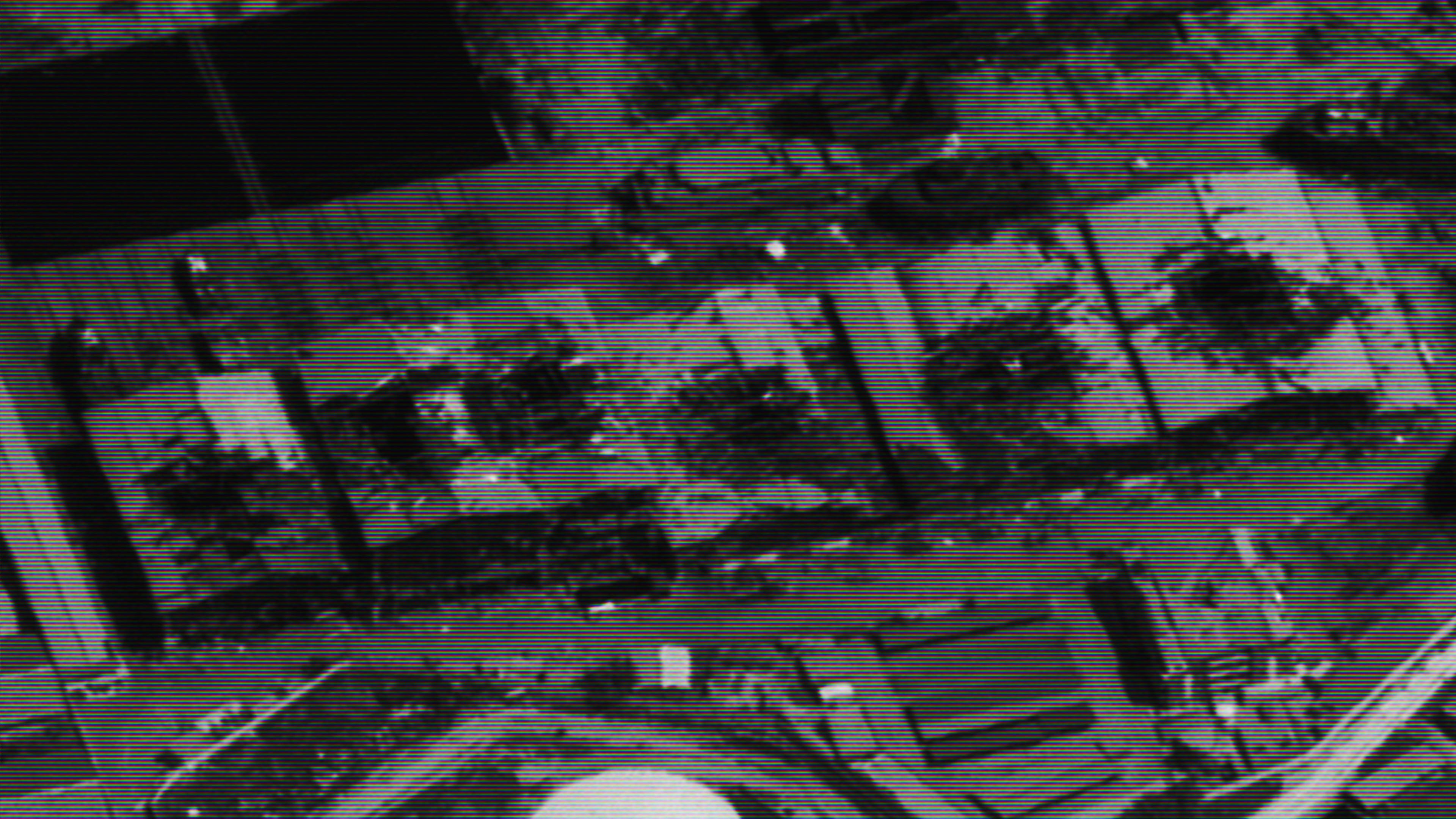
Hours later, Iran fired back. We’re talking ~94 drones and ~30 missiles across the UAE, Kuwait, Bahrain, Qatar, and Saudi Arabia. The UAE alone intercepted 17 ballistic missiles and 35 UAVs. Kuwait reported severe damage to its oil infrastructure. The Habshan gas complex in the UAE got hit for the second time.
Pull up the Gulf in God’s Eye, and you can watch the retaliatory strikes light up in real time -- UAE, Kuwait, Bahrain, Qatar, Saudi Arabia, all within hours of each other. The pattern tells the story: Iran systematically hitting every US-host country in the region.
And Iran went after the bypass infrastructure -- the Petroline and Fujairah pipelines that Saudi Arabia and the UAE built for exactly this scenario. Iran is saying: you think you can route around us? Think again.
And both sides couldn’t even agree on what the ceasefire said. Iran proposed a 10-point plan. The US countered with a 15-point version. Iran released multiple versions of theirs with differences between the Persian and English texts. The White House said the plan Iran published wasn’t the one the US approved. They were literally working off different documents.
The FARP
If you rewind to the week before the ceasefire, the events leading up to it are genuinely wild.
On April 3rd, Iran shot down an F-15E Strike Eagle deep in Iranian territory -- callsign Dude 44. The pilot was recovered quickly. The weapons systems officer, a Colonel, ejected onto a 7,000-foot ridge in the Zagros Mountains and hid in a crevice for 36 hours while IRGC forces searched for him.
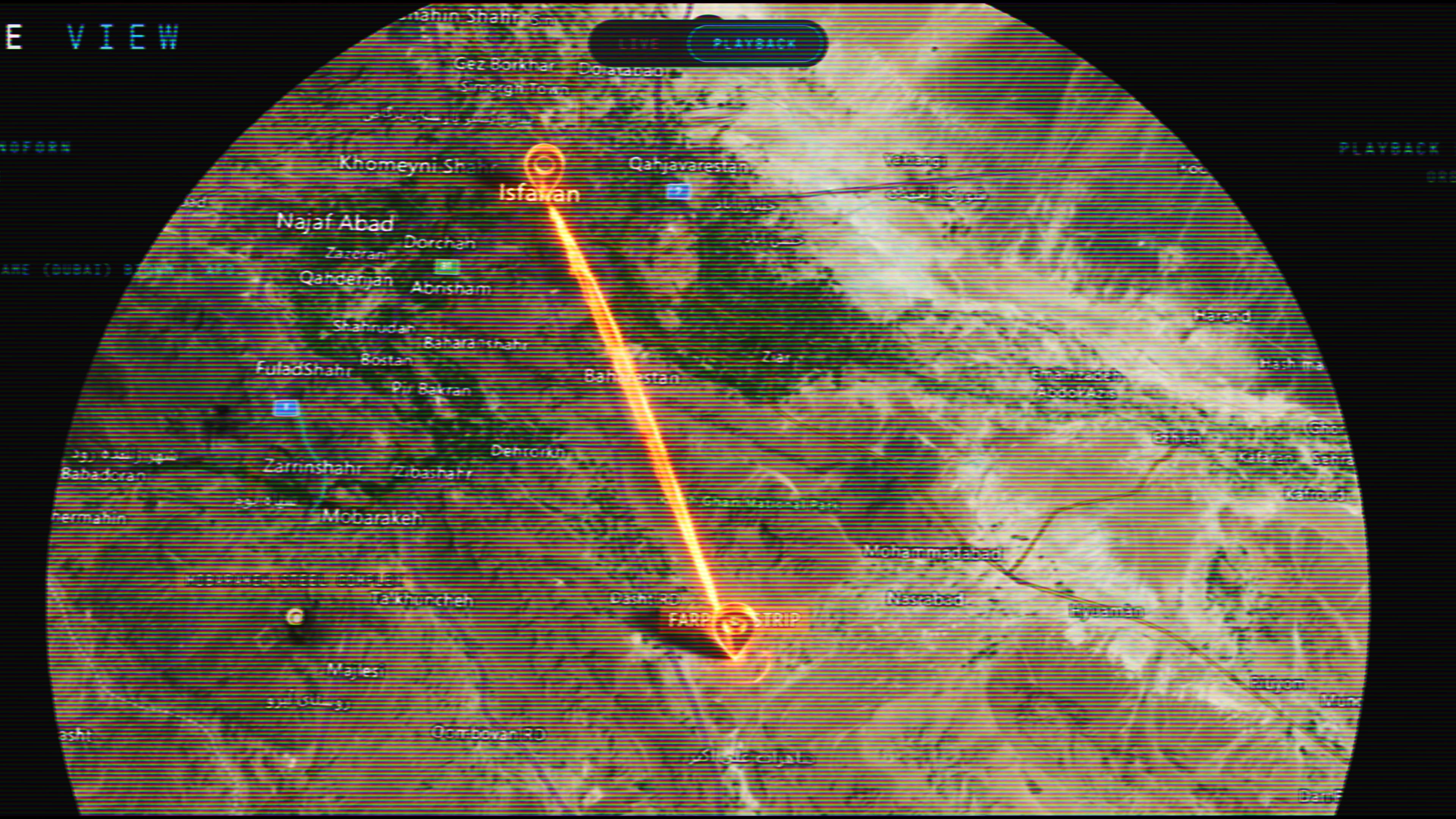
On April 5th, DEVGRU and Delta Force airdropped in with 155 aircraft in support and roughly 100 special operations forces on the ground. They set up a forward base on an abandoned agricultural airstrip about 14 miles north of Shahreza, Isfahan province -- approximately 50 kilometers from Isfahan Nuclear Center -- one of Iran’s three major nuclear sites, with Natanz further to the north.
Think about that for a second. 155 aircraft and 100 SOF for a single airman. That’s a disproportionate response by any measure. Outlets, including the BBC, have speculated about whether the rescue was a cover for a parallel mission. 440 kilograms of 60% enriched uranium have been missing from Iran’s program since Operation Midnight Hammer last year. That uranium was last known to be at Isfahan. The FARP is right next door.
A C-295W from the 427th Special Operations Squadron -- a rare USAF transport designed for short unprepared strips -- was spotted on OSINT flying low over western Iranian desert around the same time. It can carry half a ton. The two MC-130Js at the FARP were destroyed. Official line: stuck in soft sand. OSINT speculation: they took fire coming in and couldn’t fly out.
I want to be clear -- this is all OSINT community speculation. No US official has confirmed anything beyond the rescue. But the data points are just... there. And the proximity to Isfahan is not something anyone in defense circles is willing to call a coincidence.
Meanwhile, the broader strike campaign was intensifying on both sides.
The US and Israel were systematically dismantling Iran’s industrial and military infrastructure. The B1 Bridge in Karaj -- the tallest bridge in the Middle East, reportedly used by the IRGC for missile transport -- was hit on April 2nd. Israel assassinated the head of IRGC Intelligence in Tehran. The coalition hit petrochemical complexes that produce missile propellants, airports where military aircraft were staged, and shipyards building IRGC fast-attack boats.
Iran was hitting back across the Gulf. Desalination plants in Kuwait. Oil complexes and petrochemical facilities in the UAE. Air bases hosting US forces. Iran’s message was clear: if you hit our infrastructure, we hit your allies’ infrastructure. And they were specifically targeting the pipeline bypass routes that Saudi Arabia and the UAE built for exactly this scenario.
Then April 7th: Kharg Island hit again -- 50 additional strikes on top of the 90 from March. Oil terminal preserved both times, by design. Hours later, the ceasefire.
The Blockade
JD Vance flew to Islamabad for direct talks with Iran -- the highest-level meeting between the US and Iran since the 1979 Islamic Revolution. A 300-member US delegation led by Vance, Witkoff, and Kushner sat across from a 70-member Iranian team led by parliament speaker Ghalibaf and foreign minister Araghchi. Pakistan’s PM Sharif mediated. They talked for 21 hours across three rounds. The first round was indirect. The second and third were face-to-face.
They failed.
Iran refused to commit to not pursuing nuclear weapons, refused to stop funding allied militant groups, and refused to open the strait toll-free. Iran’s parliament speaker Ghalibaf later claimed they were “inches away from an MoU” and accused the US of moving the goalposts at the last moment. Vance boarded Air Force Two without a deal.
Hours later, Trump announced a naval blockade. “Effective immediately, the United States Navy will begin the process of BLOCKADING any and all Ships trying to enter, or leave, the Strait of Hormuz.” The Navy would “seek and interdict every vessel that has paid a toll to Iran.”
On April 13th, the blockade went into effect. The USS Abraham Lincoln carrier strike group is leading the operation with 11 destroyers and the USS Tripoli amphibious group -- roughly 15 warships in total. Mine-clearing operations are underway. Trump warned that Iranian fast attack ships approaching the blockade would be “immediately ELIMINATED.”
Iran’s response? They called it piracy. The IRGC threatened “new forms of warfare” and warned that if Iranian ports are threatened, “no port in the Persian Gulf will be safe.” Thousands rallied in Tehran, Kermanshah, Shiraz, and Yazd -- though the protests are mixing anti-blockade and anti-regime sentiment, with university students chanting against both. Iran is now threatening to implement a permanent mechanism of control over the strait -- not a temporary toll, but a permanent fixture.
On the Lebanon front, it keeps escalating. Israel launched a ground assault on Bint Jbeil -- a town that saw some of the fiercest fighting in 2006 -- and aims to occupy southern Lebanon up to the Litani River. Over 2,000 people have been killed in Lebanon since the war started. Hezbollah’s chief has called on Lebanon to cancel talks with Israel entirely.
China and Russia vetoed a UN Security Council resolution calling for the strait to reopen. Both had been granted toll-free passage by Iran back in March. They’re not in a rush to change the arrangement.
As of right now, no shots have been fired at the blockade. Iran hasn’t sent warships to challenge it. But Iranian-bound vessel traffic is at a standstill. Oil spiked past $103 on the blockade news, then fell back to around $95 on speculation that talks might resume. It’s been a rollercoaster -- but oil is still up over 30% since this war started.
Where This Goes
So we went from a precarious ceasefire to failed peace talks to a US naval blockade in under a week. The toll booth Iran set up is now being challenged by aircraft carriers. The mines Iran laid are being cleared by the Navy. And the strait that was supposed to reopen is the site of what could become the most significant naval standoff since the Tanker War in the 1980s.
And you can feel it in the real world. Gas prices in the US are up over a dollar a gallon since this started, tracking toward $5 if the blockade holds. Jet fuel has spiked 95%. Sri Lanka reintroduced wartime fuel rations. The ECB is warning that Germany and Italy could tip into recession. When oil gets expensive, everything gets expensive -- it’s not just fuel, it’s plastics, fertilizer, the supply chain that moves every physical product on Earth. One 21-mile chokepoint cascading into food inflation, which cascades into a global recession. We covered this in the last article. It’s happening faster than anyone projected.
Trump says Iran called and wants to negotiate. Pakistan is pushing for another round of talks. But Iran’s demand list hasn’t changed -- unfreezing assets, lifting all sanctions, uranium enrichment rights, and an end to Israeli attacks on Lebanon. The US hasn’t budged on any of those. And that passageway now has 15 warships sitting on it.
If you watch the strait in God’s Eye right now, the picture is stark. Where there used to be 130 crossings a day, there’s almost nothing. The data doesn’t editorialize. It doesn’t have an opinion. It just shows you what’s actually happening -- and right now, what’s happening is that the most important waterway on Earth is functionally closed, with two of the world’s most powerful militaries staring at each other across it.
I’ll keep God’s Eye running to monitor the situation as it continues.
Previous God’s Eye videos:
If this gave you something to think about, share it with someone who should see it. This affects all of us.
-Bilawal
I found your analysis on YouTube, great work. Thank you for sharing.
When flows disappear, price doesn’t debate headlines, it just revalues risk in real time.
You can almost feel the moment participants stopped listening to the ceasefire and started trading what was actually moving through the strait.